
CAMPER X
HOME — JOURNAL — Guide
Guide
How to prepare your pick-up for travel with a demountable camper cell
Traveling with a demountable camper cell on a pick-up opens up real freedom on the road, but getting the vehicle ready first is essential. Suspension, tyres, electrical autonomy, and mounting: here are the key points to check before you set off.
Camper X6 min read
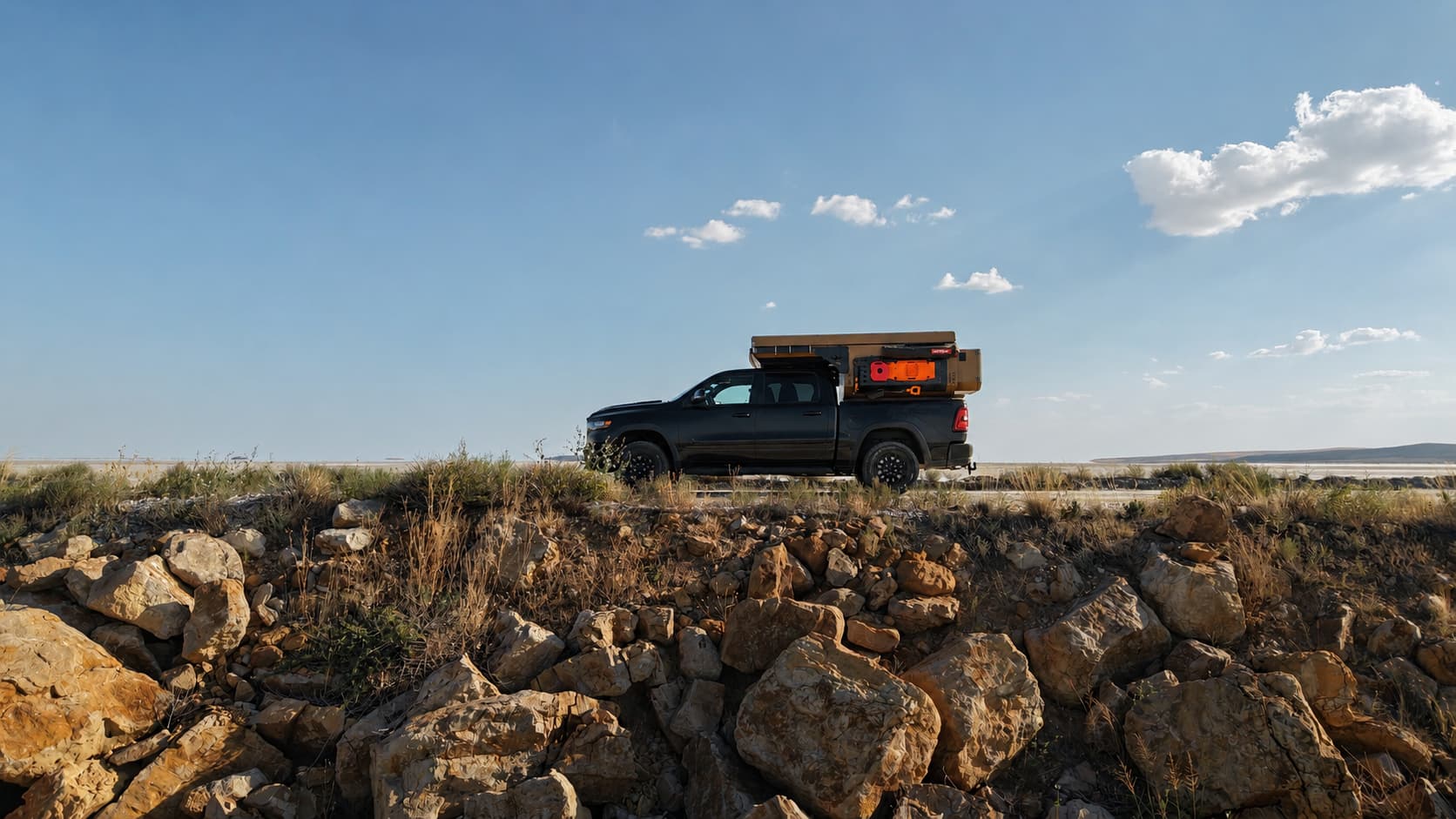
Traveling with a demountable camper cell on a pick-up opens up real freedom on the road, but getting the vehicle ready first is essential. Suspension, tyres, electrical autonomy, and how the cell is mounted: several things need checking, depending on your pick-up, its configuration, and how you plan to use it. There's no single setup that works for every vehicle. The pick-up's specifications, the equipment already fitted, and the kind of trip you have in mind all need to be factored in. In this guide, we cover the main points worth checking before heading off with a CAMPER-X cell.
Pick-up suspension with a demountable cell: which solution should you choose?
Fitting a demountable cell adds load to the bed and can change how the pick-up behaves compared with driving it empty. Depending on the vehicle, its configuration, the cell fitted, and the gear carried, the suspension can come under greater strain. The vehicle's ride height can shift once loaded, with the rear axle typically bearing more of the load depending on the setup. Even with a compact cell like the REVO, it's worth checking that the vehicle still suits the intended use. Before considering any modification, take into account the pick-up's specifications, its actual configuration, and the manufacturer's recommendations for that vehicle. Among the solutions commonly used, auxiliary air suspension and reinforced leaf springs are the two most popular.
Air suspension: an adjustable solution
To fine-tune the pick-up's balance, fitting air suspension — often called air bags — is a particularly versatile option. The system relies on air bellows placed between the chassis and the rear axle, letting you adjust the vehicle's ride height to match the load. Depending on the setup, this system can help adjust the suspension's behavior as the load changes. Any adjustment should always follow the system manufacturer's recommendations as well as those applicable to the vehicle. When parked, some systems also let you vary the vehicle's ride height slightly. This can be handy when wild camping, but it's no substitute for leveling chocks or parking on stable, suitable ground.
Reinforced leaf springs: for regular heavy-load use
For a pick-up regularly used with a significant load, fitting a reinforced leaf spring kit can be a suitable solution. This type of equipment is designed to adapt the suspension's behavior to regular heavy-load use and to limit rear-axle sag depending on the setup. Solutions such as Terrain Tamer kits can be considered depending on the exact pick-up model and intended use. It's worth remembering that reinforcing the suspension doesn't automatically change the load limits or GVWR set for the vehicle. The choice of kit should therefore be made based on the pick-up, its actual configuration, and the intended use.
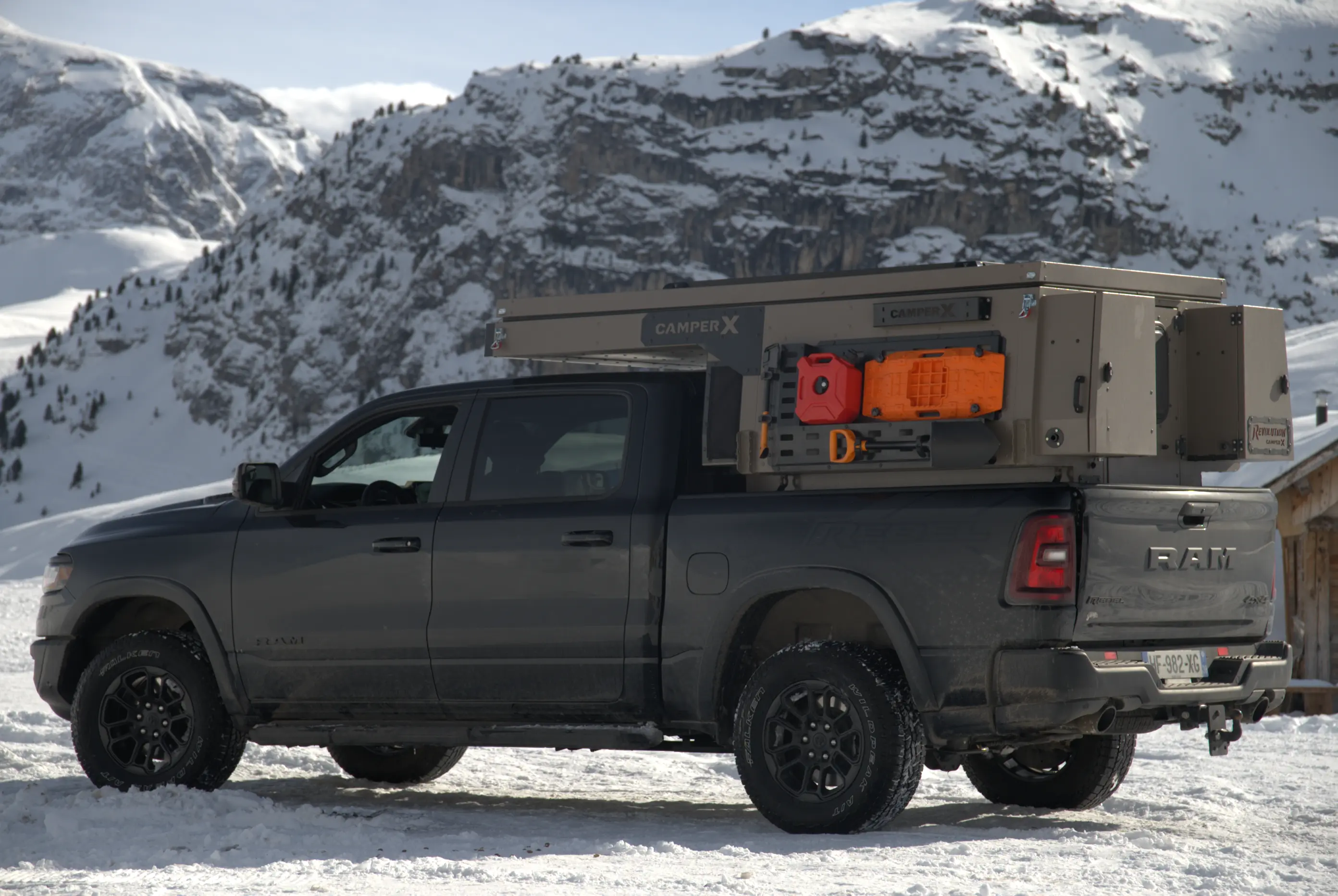
4x4 tyres for a pick-up with a cell: AT, MT, or RT — how to choose?
On an off-road trip, every detail counts toward keeping your vehicle reliable. The tyre is the only point of contact between your loaded vehicle and the ground. Choosing tyres suited to your vehicle and how you use it is essential for keeping handling consistent on both tarmac and track. Fitting the right tyres makes every journey easier, and lets you set off on your next road trip with a demountable cell with real peace of mind.
Factory tyres and a loaded vehicle: what to check
The tyres fitted at the factory on a pick-up aren't necessarily suited to every use, especially once the vehicle is regularly loaded or driven off-road. With a cell and gear on board, it's worth checking several things:
- load index;
- approved dimensions;
- recommended pressure;
- sidewall condition;
- overall tyre wear;
- how well the tyre suits the terrain you'll encounter.
Depending on the vehicle, the load, and the use, a more off-road-oriented tyre can offer a construction better suited to certain track conditions. The choice should always stay consistent with the vehicle manufacturer's and tyre maker's recommendations. Off-road, it's common to lower tyre pressure slightly to increase the contact patch and improve traction, particularly in sand, mud, or on certain tracks. That said, caution is needed: pressure that's too low can increase the risk of the tyre coming off the rim or being damaged, especially with a loaded vehicle. The right pressure depends on the tyre, the load, and the terrain. It should be adapted to your own setup rather than taken from a one-size-fits-all figure.
AT, MT, or RT: which tyre type suits your pick-up and your use?
All-Terrain (A/T) tyres offer good versatility between road and track. They suit travelers who alternate between long highway stretches and dirt roads, with a construction built for mixed use. They show their limits sooner on the most demanding terrain, such as deep mud or technical rocky ground. Well-known references include the BFGoodrich All-Terrain T/A KO2 / KO3, General Tire Grabber AT3, and Toyo Open Country A/T.
Mud-Terrain (MT) tyres lean further toward off-road use, especially in mud and on difficult terrain. Their design favors traction and durability in more demanding conditions. In exchange, they tend to be noisier on the road, slightly increase fuel consumption, and wear faster over long highway stretches.
For a middle ground between the two, you might try Rugged Terrain (RT) tyres. These aim to offer an intermediate compromise between AT and MT, making them suited to dual use. Just bear in mind that if you do a lot of highway driving or a lot of off-roading, you'll want to pick the tyre that best matches your actual use.
All-Terrain (AT) tyres are a solid compromise for mixed road-and-track use. Whichever model you choose, though, it needs dimensions and a load index suited to the vehicle. For mostly extreme off-road use (mud, rocks), Mud-Terrain (MT) tyres are the better pick.
Before changing tyres, check their compatibility with the vehicle, the permitted dimensions, and the required load indices.
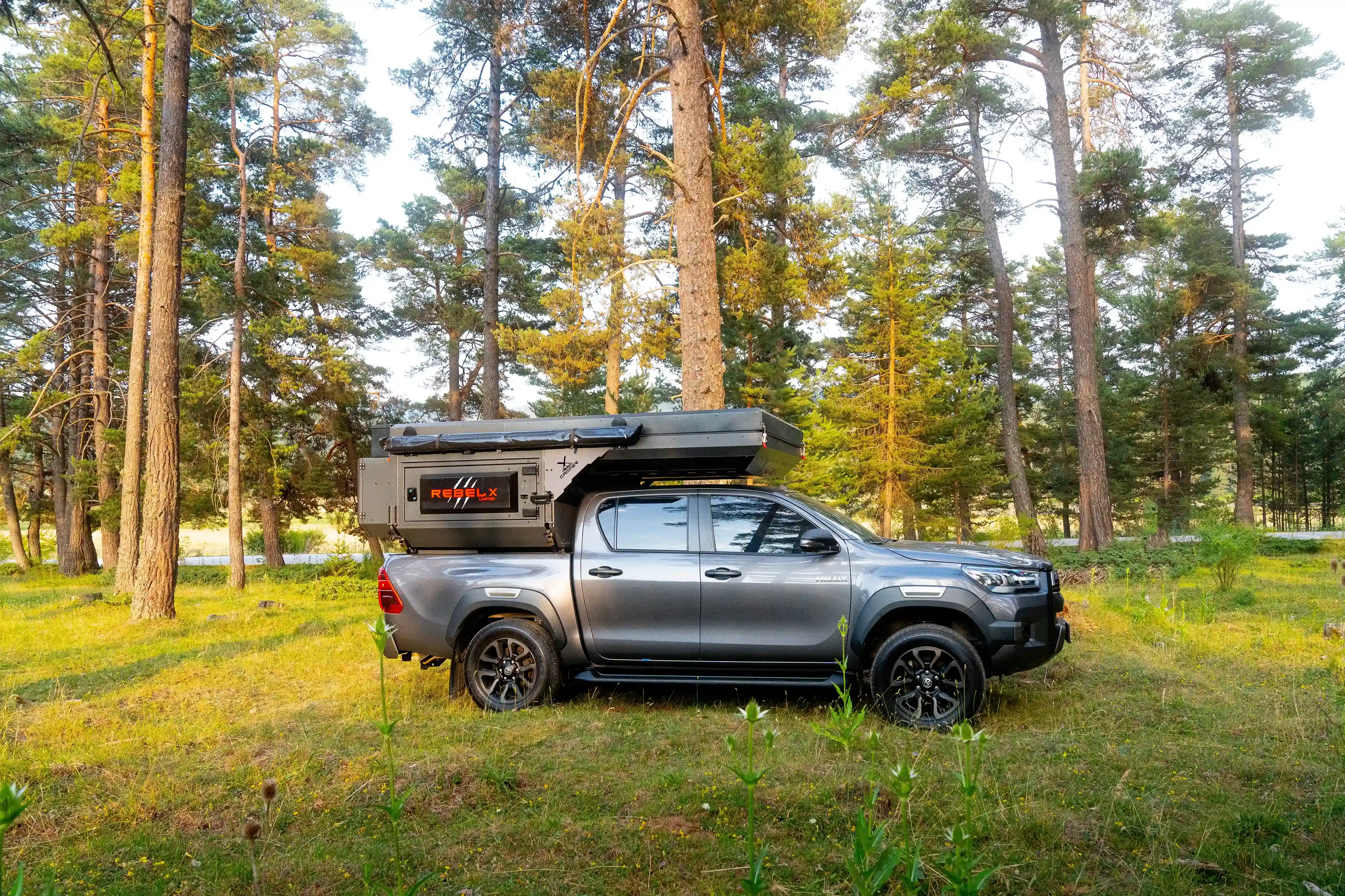
Electrical autonomy in a pick-up cell: which solution should you choose?
Even on the road, electricity remains essential for everyday comfort: compressor fridge, parking heater, lighting, water pump, and charging phones and laptops. The goal is to have power suited to this equipment without relying solely on the pick-up's starter battery. Depending on the configuration chosen, a portable power station such as an EcoFlow unit can be built in to run the cell's main equipment and cover most electrical needs during the trip.
Recharging your battery at a campsite
When a stop includes a night at a campsite, a serviced rest area, or a host's home, the battery can simply be recharged by plugging the cell into the mains. CAMPER-X cells come with an external 220V shore-power socket. Once plugged in, the system recharges the auxiliary battery and powers the cell's equipment directly from the mains. It's a practical way to top up your energy before heading back off-grid.
Extending your autonomy with solar power
For more remote wild camping, solar panels extend electrical autonomy and reduce how often you need an external power source. On a cell like the X PLORER, you can opt for a solar setup paired with a standard battery or an EcoFlow station. Charging naturally depends on sunlight, available power, and how much the equipment draws.

Mounting a demountable cell on a pick-up: how does it work?
CAMPER-X cells are designed to be installed in the pick-up's bed using an entirely demountable mounting system. The cell is held in place by four anchor points, spread across the front and rear of the bed. Depending on the configuration, the mounting can combine flexible straps and/or metal tie rods. The goal is to hold the cell securely while keeping the installation fully removable, with no structural modification to the vehicle.
How are CAMPER-X cells secured?
The mounting relies on the anchor points built into the pick-up's bed. Depending on the configuration, the cell can be held by two metal fixings at the rear and two flexible straps at the front. The flexible straps allow a small amount of give with the vehicle's movement when driving on the road or on track. Flexible straps can also be used at the rear depending on the configuration chosen, without affecting how securely the cell is held. This combination lets the mounting adapt to the stresses the vehicle encounters in use.
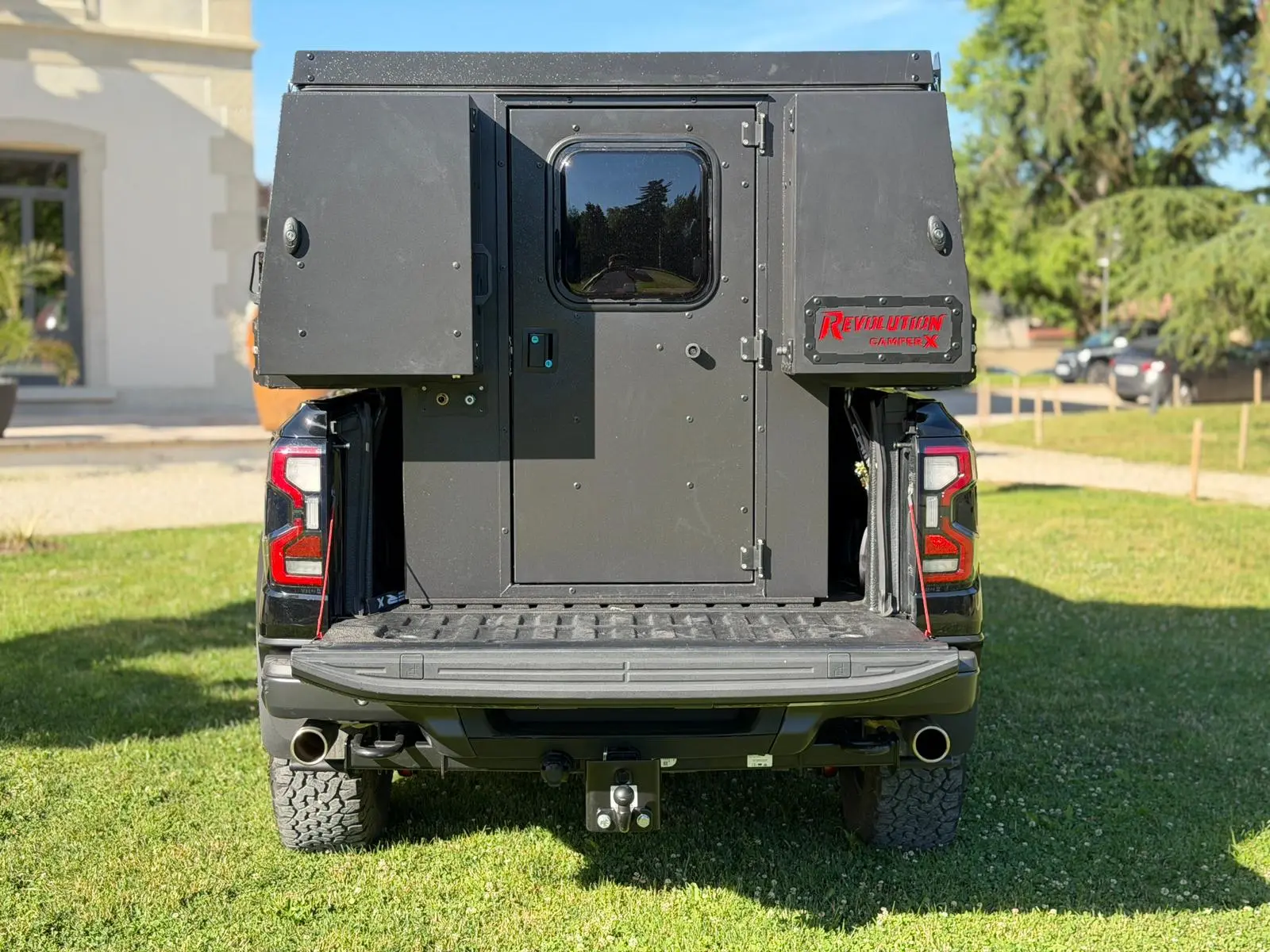
A cell that stays fully demountable
One of the main advantages of a pick-up cell is being able to remove it once the vehicle needs to go back to its everyday use. Thanks to its four legs with jacks, the cell can be raised and then detached from the pick-up. In the configurations offered by CAMPER-X, installation doesn't require any structural modification to the vehicle, nor any destructive drilling into the chassis or bodywork. The pick-up can then return to its original configuration once the cell is removed, including, depending on the vehicle's configuration, keeping its tailgate.
Protecting the bed during installation
When installing a cell, it can be worth using suitable protection in the bed. A bed liner or a non-slip mat protects the bed's paintwork and helps limit the cell's movement during use. The choice of protection depends on the vehicle and the mounting system used.
Join the Camper X community: advice, expertise, and road trips with total confidence
Preparing your pick-up and your cell before you leave means traveling with more peace of mind and tailoring your setup to how you'll actually use it. Every vehicle and every project is different, so it's important to take into account the pick-up's configuration, the equipment fitted, and the kind of trip planned. At CAMPER-X, we guide our customers in choosing their cell and configuration to deliver a setup suited to their vehicle and their needs. Beyond the equipment itself, CAMPER-X also brings together a community of travelers who share the same drive: to make the most of their pick-up, discover new horizons, and travel with complete freedom.